Welcome to this dictionary, designed to elucidate the key concepts and terms necessary to fully grasp the intricate topic of What is a reflection. As a pivotal concept in various fields, ranging from Physics to Philosophy, understanding ‘reflection’ is crucial for university students crafting a thesis. This dictionary will not only provide detailed definitions and explanations but also contextual applications and relevance of each concept. The content presented here aims to equip students with the knowledge to confidently and accurately incorporate the notion of ‘reflection’ into their academic discourse, thereby enriching their thesis and enhancing their understanding of their respective research fields.
Understanding the Concept of Reflection: A Simplified Explanation
In the realm of physics, optics, and human cognition, the concept of reflection plays a pivotal role. But, what is a reflection? This article seeks to demystify the concept, providing an in-depth and simplified explanation, aimed primarily at university students.
The Physical Concept of Reflection
In physics, the term ‘reflection’ is used to describe a phenomenon that occurs when a wave comes into contact with a surface or boundary causing it to change direction. This is a fundamental principle in the field of optics. The most common example of this is light reflection, which allows us to see the world around us.
The law of reflection states that the angle of incidence (the angle at which incoming light hits a surface) is equal to the angle of reflection (the angle at which it leaves the surface). This principle is the reason why we are able to see objects in mirrors as they appear to be. The light rays coming from the object are reflected off the mirror’s surface and into our eyes, enabling us to perceive the object’s image.
However, reflection is not limited to light. Other waves, such as sound and water waves, also undergo reflection. For instance, an echo is a reflection of sound that arrives at the listener some time after the direct sound.

The Psychological Concept of Reflection
Outside the realm of physics, reflection has another significant meaning in the discipline of psychology and personal development. In this context, reflection refers to the process of examining and interpreting experience to gain new understanding. It is a critical process in learning, problem-solving, and decision-making.
Reflective thinking involves looking back at events, analyzing what happened, what was learned, and considering how these learnings can be applied to future situations. By actively engaging in reflection, individuals can deepen their learning, enhance their performance, and facilitate continuous improvement.
The Mathematic Concept of Reflection
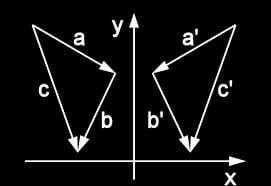
In mathematics, particularly in geometry, a reflection is a transformation that flips a figure over a line of reflection, creating a mirror image. The original figure and its image after reflection exhibit point symmetry, meaning each point on the original figure has a corresponding point on the image that is equal distance from the line of reflection, but in the opposite direction.
The concept of reflection in mathematics is crucial for understanding properties of shapes and figures, and it plays a significant role in various areas of mathematics and its applications, including computer graphics and architectural design.
Conclusion
In summary, the concept of reflection, though varied in its application, is a fundamental principle within several disciplines. From the bouncing back of light in physics, to introspective thinking in psychology, and the flipping of figures in mathematics, understanding the concept of reflection is crucial.